06.01.2026
By Marketing Team

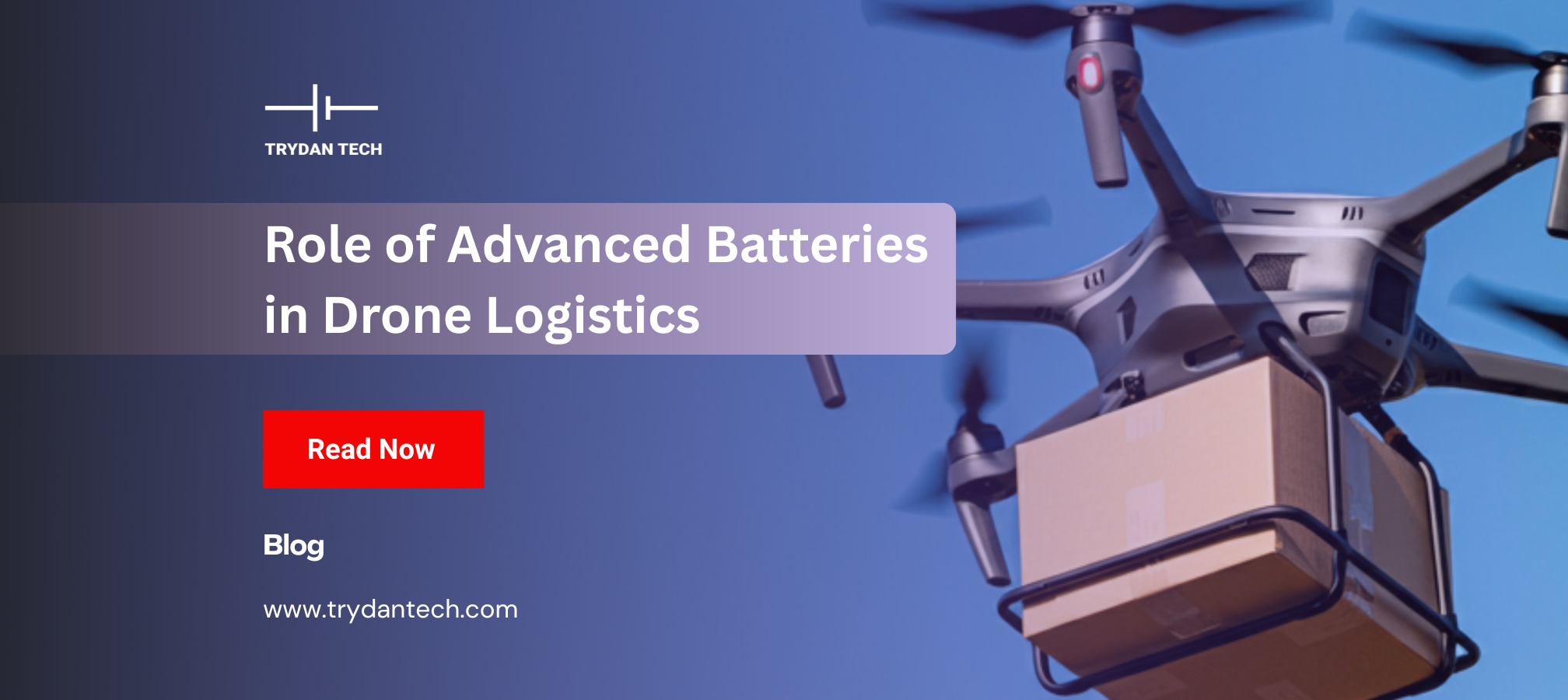
Drone logistics is no longer a futuristic concept. It is rapidly becoming a cornerstone of modern supply chain strategies. From delivering critical medical supplies to transporting e-commerce packages, drones are revolutionizing the way goods move across short and medium distances. Their promise lies in bypassing ground traffic, reducing delivery times, and reaching remote or congested areas where conventional transport struggles.
However, at the heart of this transformation lies a critical component: the battery. The evolution of advanced battery technologies is directly fuelling the growth and reliability of drone logistics.
Drones, unlike trucks or vans, depend entirely on onboard energy to operate. The battery dictates:
Without advanced batteries, drone logistics would remain a niche capability rather than a scalable logistics solution.
Most drones today use lithium-ion batteries (commonly NMC or LFP chemistries). While these offer decent energy density and acceptable cycle lives, they also bring constraints:
These challenges have pushed battery manufacturers and drone companies to seek next-generation solutions.
The battery landscape is evolving to meet the specialized needs of drone logistics. Some of the most promising advancements include:
1. High Power LFP (Lithium Iron Phosphate)
Newer LFP formulations offer improved safety, longer lifespans (around 3000+ cycles), and the ability to handle high continuous and pulse currents. This is critical for drones that require sudden bursts of power during takeoff or maneuvering in adverse weather.
2. Lithium-Sulfur (Li-S)
Li-S batteries boast energy densities above 475 Wh/kg, far surpassing traditional lithium-ion chemistries. This means lighter batteries can carry drones further, or the same weight can carry more cargo. Although their cycle life is currently lower (around 300 cycles), ongoing developments aim to push this higher, making them a strong candidate for mid-range drone logistics.
3. High Power and High Energy NMC
High-power, high-energy NMC cells deliver both sustained energy and rapid bursts of power — essential for heavy-lift drones and aerial logistics where long-range endurance must be matched with steep climbs and sudden load shifts.
4. Thermal Stability and Form Factor Innovations
Batteries engineered for stable performance across a broad temperature range are essential for drone operations in diverse climates, ensuring reliable power delivery in both hot and cold conditions.
By leveraging these advanced battery technologies, drone logistics companies gain significant advantages: 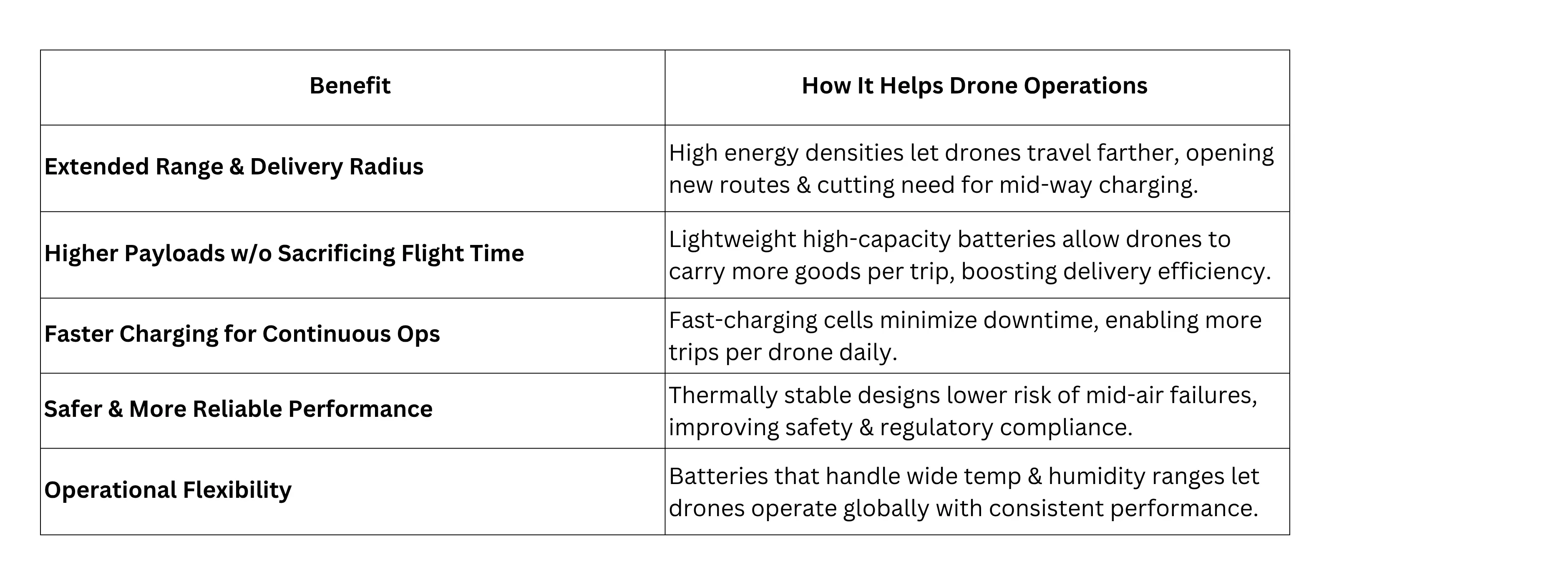
While many battery startups promise futuristic breakthroughs, few offer solutions ready for real-world deployment.
Trydan Tech, focuses on high-power and high energy, thermally stable, and design-flexible energy solutions that directly address drone logistics needs.
With a team led by seasoned scientists and former ISRO experts is driving innovation beyond the lab. We have already developed a robust product pipeline, filed multiple patents, and established partner-ready manufacturing. This positions us perfectly to support drone logistics providers looking to scale their operations safely and efficiently.
Read More About Our Drone Battery Innovations
As drone logistics continues to evolve from pilot projects to mainstream operations, the demands on energy storage are becoming more complex. Advanced battery technologies are no longer optional. They are the backbone enabling drones to fly farther, carry more, and operate reliably under diverse conditions.
Companies like Trydan Tech are accelerating this shift by delivering batteries that combine high power, exceptional energy densities, thermal stability, and long cycle lives. For drone logistics providers, partnering with such next-generation battery manufacturers could well be the strategic advantage that defines the future of aerial delivery.
We use cookies to enhance your browsing experience, analyze site traffic, and personalize content. By continuing to use our site, you consent to our use of cookies. Learn more